

Bible Stories app
Stories of the Bible, told out loud
Narrated Bible stories, book guides and hard questions answered. Listen offline, anywhere.



Latest episodes
 31 min
Hard Bible Questions
What Moses and Elijah Actually Talked to Jesus About on the Mount of Transfiguration
Today, we will explore what Moses and Elijah discussed with Jesus on the mountain of transfiguration, and why their conversation points us toward the cross. This extraordinary moment reveals Christ’s glory while preparing His disciples to understand the suffering ahead. Days earlier, Jesus had told His disciples that He would be killed and raised to life. Peter could not accept it: “Never, Lord!” he said. “This shall never happen to you!” (Matthew 16:22) He recognized Jesus as the Messiah, but he could not yet understand why the Messiah must suffer. Then Jesus took Peter, James, and John up a mountain. His appearance changed, His clothes became dazzling, and Moses and Elijah appeared beside Him. Luke tells us what they discussed: “They spoke about his departure, which he was about to bring to fulfillment at Jerusalem.” (Luke 9:31) The Greek word translated as departure is exodus. It recalls Israel’s deliverance from Egypt and invites us to see Jesus’ approaching death in the light of God’s saving work. Through His death and resurrection, Christ would accomplish a deliverance reaching beyond slavery in Egypt to the power of sin and death. The cross was central to His mission. Jesus explained elsewhere: “No one takes it from me, but I lay it down of my own accord.” (John 10:18) Moses and Elijah stood with Him in glory, speaking about the journey His disciples struggled to accept. Peter offered to build three shelters. But a cloud overshadowed them, and the Father spoke: “This is my Son, whom I love; with him I am well pleased. Listen to him!” (Matthew 17:5) They needed to trust Jesus, including His words about suffering and resurrection. Terrified, the disciples fell facedown. Then the One whose face had shone like the sun came near: “Jesus came and touched them. ‘Get up,’ he said. ‘Don’t be afraid.’” (Matthew 17:7) His glory did not make Him distant from their weakness. When they looked up, they saw Jesus alone. Soon they would descend the mountain, and He would continue toward Jerusalem. Perhaps you are facing a difficult road and wish you could remain in a moment where everything feels clear and safe. The transfiguration directs our confidence toward the Savior who walks ahead of us. The disciples did not understand everything they witnessed, but they had been shown whom they could trust. Thank you for joining us in this episode. May the Lord help you listen to His Son, receive His reassurance in your fear, and find hope in His victory over death. Until next time, may the memory of Christ’s glory sustain you through the valleys where faith must keep walking.
- 31 min
 37 min
Bible Chapters Explained
Daniel Saw the End of the World Thousands of Years Ago. Here Is What He Wrote
An old man stands on the bank of the Tigris River. He was taken from his home as a boy, forced to serve kings who did not know his God, and has outlived more than one empire. Then a figure clothed in linen appears, with a face like lightning and eyes like burning fire, and shows Daniel the end of the world. Many people assume the Bible's words about the end must be a book of terror, or a code for clever people to crack. But Daniel did not write to frighten anyone. He wrote for people who feel small and afraid in a world that seems out of control, people who watch good things crumble and wonder if God has forgotten them. In this episode, we follow Daniel through his visions in the order he came to understand them. We look at the great statue of gold, silver, bronze, iron, and clay, and the stone cut without hands that becomes a mountain filling the earth. We see four beasts rise from a stormy sea, a heavenly courtroom where the books are opened, and one like the Son of Man coming with the clouds of heaven to receive an everlasting kingdom. We trace the ram and the goat, the Anointed One who would be cut off, the measured season of trouble, and the promise of resurrection at the very end of the book. Daniel was never given a date he could circle. What he was given, over and over, was a verdict, and it falls on the side of God and His people. He was not finally pointing at a date. He was pointing at a Person. Bible verses included in this episode: “In the days of these kings shall the God of heaven set up a kingdom, which shall never be destroyed: and the kingdom shall not be left to other people, but it shall break in pieces and consume all these kingdoms, and it shall stand for ever.” (Daniel 2:44) “I saw in the night visions, and, behold, one like the Son of man came with the clouds of heaven, and came to the Ancient of days, and they brought him near before him.” (Daniel 7:13) “To finish the transgression, and to make an end of sins, and to make reconciliation for iniquity, and to bring in everlasting righteousness.” (Daniel 9:24) “And many of them that sleep in the dust of the earth shall awake, some to everlasting life, and some to shame and everlasting contempt.” (Daniel 12:2) “And they that be wise shall shine as the brightness of the firmament; and they that turn many to righteousness as the stars for ever and ever.” (Daniel 12:3) “But go thou thy way till the end be: for thou shalt rest, and stand in thy lot at the end of the days.” (Daniel 12:13) If the world around you feels like it is coming apart, or you feel old, forgotten, and far from home, Daniel's last words are for you. The kingdoms that frighten you have an expiration date, and the One who meets us at the end is the Son of Man, with kindness in His eyes and a kingdom in His hands. Go your way, one faithful day at a time. You shall rest, and you shall rise, and you shall stand in your place among His own.
 33 min
Stories of Bible Characters
Why Wasn't AARON EXECUTED With The 3,000 Who Made The Golden Calf?
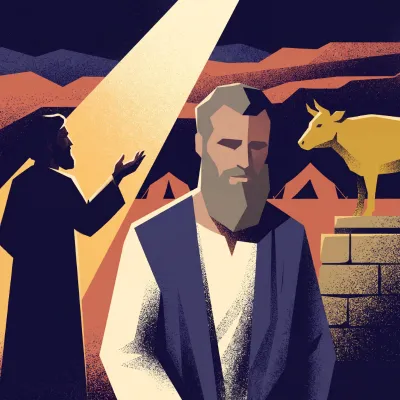
The Levites moved through the camp of Israel with swords in their hands, and by sundown three thousand people were dead. They walked past tent after tent, and at some point they walked past the one man who had melted the gold, shaped the idol with his own tool, built an altar before it, and announced the feast. They walked past Aaron, and not one sword touched him. Within months, the man who made the golden calf was standing before God in holy garments as the first high priest of Israel. How can that be right? Why was Aaron spared when three thousand others were not? In this episode, we explore the real answer the Bible gives, hidden in a single verse Moses did not speak until forty years later. We feel the fear and impatience at the foot of Sinai, look honestly at the full weight of Aaron's sin, and see that God's first sentence was against the whole nation. We discover that the Lord was angry enough with Aaron to destroy him, and that Aaron lived because Moses prayed for him by name. We also follow Moses as he "stood in the breach" and offered to be blotted out of God's book for the people, and why God refused. We trace Aaron's life after the calf: the sin offering for himself at his ordination, his failures with Miriam and at Meribah, and his death on Mount Hor. And we see how his story points to the one Mediator whose offer heaven did not refuse. Bible verses included in this episode: “Whoever is for the Lord, come to me.” (Exodus 32:26) “And the Lord was angry enough with Aaron to destroy him, but at that time I prayed for Aaron too.” (Deuteronomy 9:20) “Had not Moses, his chosen one, stood in the breach before him to keep his wrath from destroying them.” (Psalm 106:23) “But if not, then blot me out of the book you have written.” (Exodus 32:32) “Therefore he is able to save completely those who come to God through him, because he always lives to intercede for them.” (Hebrews 7:25) If you have failed under pressure and wondered whether God could ever use you again, look at what He did with Aaron. God's callings are not reserved for people with clean histories. They are given to forgiven people. Aaron did not know Moses was praying for him. If you belong to Jesus, He always lives to intercede for you. The sentence has already fallen on Him, and the God who kept a place for the man who made the golden calf has kept a place for you.
 33 min
Bible Chapters Explained
Ezekiel and the Valley of Dry Bones: When God Brings Back What You Thought Was Dead
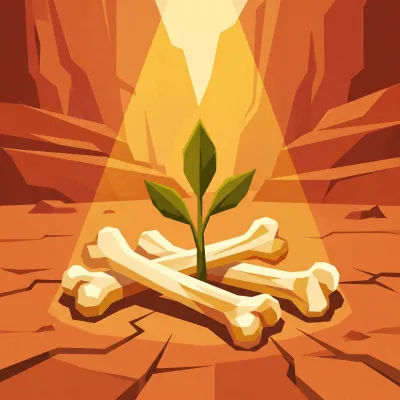
Our bones are dry. Our hope is lost. We are cut off. Those three sentences were spoken by God's own people in exile in Babylon. The temple was ash, the throne of David sat empty, and every visible evidence of God's promises had been destroyed. So they wrote the ending themselves: it is over. Heaven heard those three sentences. God's answer was to carry a prophet out in the Spirit and set him down in the middle of a valley full of bones, bones so old and so dry the sun had bleached them white. Then He made that prophet watch what He does with things everyone has agreed are finished. In this episode, we walk through Ezekiel chapter 37. We meet Ezekiel, a priest who never served a day in the temple, who lost his homeland, his calling, and his wife. We follow him as God walks him back and forth through the devastation, asks him, "Can these bones live?", and commands him to preach to the dead. We watch the bones rattle together, receive sinews, flesh, and skin, and still lie without breath, until God sends the ruach, the wind, breath, and Spirit, and they stand up an exceedingly great army. And we see how the vision reaches forward to the two sticks joined as one, to the promised shepherd from David's line, to the tomb of Lazarus, to the risen Jesus breathing on His disciples, and to the gospel itself. Salvation is not self improvement. It is resurrection. It always was. Bible verses included in this episode: “And He said to me, ‘Son of man, can these bones live?’ So I answered, ‘O Lord God, You know.’” (Ezekiel 37:3) “Thus says the Lord God to these bones: ‘Surely I will cause breath to enter into you, and you shall live.’” (Ezekiel 37:5) “And breath came into them, and they lived, and stood upon their feet, an exceedingly great army.” (Ezekiel 37:10) “I will put My Spirit in you, and you shall live, and I will place you in your own land.” (Ezekiel 37:14) “I am the resurrection and the life. He who believes in Me, though he may die, he shall live.” (John 11:25) “But God, who is rich in mercy, because of His great love with which He loved us, even when we were dead in trespasses, made us alive together with Christ.” (Ephesians 2:4-5) This message is for anyone with a valley of their own: a marriage that stopped sharing a heart, a child who walked away, a faith that has gone dry, or a calling buried long ago. God knows exactly how dead it is, He has heard your hopeless sentences, and He answers them without anger. So do not write the ending yourself. Keep the word of God moving over your valley, and ask Him for the breath. Can these bones live? He has already shown us His answer.
 32 min
Stories of Bible Characters
Why Is There No Tribe Of Joseph In Israel? The Shocking Reason Explained
There is a name missing from the map of Israel, and it belongs to the one man who made the map possible. Joseph, the favorite son and the dreamer who saved his whole family from famine, has no territory named after him when Joshua divides the promised land among the tribes. It can look like an oversight, or even an insult. But Joseph's name is not missing because he received too little. It is missing because he received too much to fit inside a single border. In this episode, we explore the surprising reason there is no tribe of Joseph. We look at the birthright and double portion of the firstborn, how Reuben lost it, and how it passed to Joseph. We step into a dim room in Egypt where the dying Jacob adopts Joseph's two sons, Ephraim and Manasseh, as his own, and then crosses his arms to bless the younger above the older, redeeming the deception of his own youth. We see why the count of the tribes still stays at twelve because Levi's inheritance was the Lord Himself, and why two boys with an Egyptian mother became the model of blessing for generations. We also trace Joseph's name through the rest of Scripture, from Shiloh and the Psalms to Ezekiel's "two portions" and the tribe of Joseph in Revelation 7, and see how Joseph's story points to Jesus, the beloved Son whose reward is children adopted into God's family. Bible verses included in this episode: “He was the firstborn, but because he defiled his father’s bed, his birthright was given to the sons of Joseph.” (1 Chronicles 5:1) “And now your two sons, Ephraim and Manasseh, who were born to you in the land of Egypt before I came to you in Egypt, are mine; as Reuben and Simeon, they shall be mine.” (Genesis 48:5) “I know, my son, I know. He also shall become a people, and he also shall be great; but truly his younger brother shall be greater than he.” (Genesis 48:19) “By you Israel will bless, saying, ‘May God make you as Ephraim and as Manasseh!’” (Genesis 48:20) “The Lord is his inheritance.” (Deuteronomy 10:9) “Give ear, O Shepherd of Israel, You who lead Joseph like a flock.” (Psalm 80:1) “Joseph shall have two portions.” (Ezekiel 47:13) “But as many as received Him, to them He gave the right to become children of God.” (John 1:12) If you feel overlooked, left off the lists, or wonder whether your background disqualifies you, let Joseph's story stand as a witness. The people the world can no longer find on its lists are often the ones God has recorded most carefully. The God who never forgot Joseph has not forgotten you. The double portion always comes after the pit.
 32 min
Stories of Bible Characters
The Fall of Lucifer: How the Most Beautiful Angel Became Satan
The most beautiful angel who ever existed did not become Satan because he was tricked, wounded, or forced. He fell because of what happened quietly inside his own heart. A creature who stood closer to God than almost anything ever made looked at his beauty, his wisdom, and his nearness to the throne, and decided it was not enough. He wanted to be like God instead of loving God. If you have ever felt far from God, unworthy, tired, or ashamed of your own heart, this story is for you. The one who fell was not far from God when he fell. He was near. And that tells us that nearness alone is not what keeps us safe. In this episode, we explore the fall of Lucifer, gathering the pieces Scripture gives us in Isaiah 14 and Ezekiel 28. We look at where the name Lucifer comes from, how high this anointed guardian once stood, and how pride grew in secret until it became rebellion. We follow him from heaven to the garden of Eden, where he offered the same lie that ruined him, and we see what he truly lost. Not a battle, which he could never win, but nearness to God. Then the story turns from warning to good news. Where Lucifer, a creature, reached up to seize God's place, Jesus, who truly is God, came down, humbled Himself, and went to the cross for us. The title the fallen angel lost, the morning star, now belongs to Christ. Bible verses included in this episode: “How you have fallen from heaven, morning star, son of the dawn!” (Isaiah 14:12) “Your heart became proud on account of your beauty, and you corrupted your wisdom because of your splendor.” (Ezekiel 28:17) “You said in your heart, ‘I will ascend to the heavens, I will raise my throne above the stars of God... I will make myself like the Most High.’” (Isaiah 14:13–14) “Become conceited and fall under the same judgment as the devil.” (1 Timothy 3:6) “I saw Satan fall like lightning from heaven.” (Luke 10:18) “The great dragon was thrown down, that ancient serpent, who is called the devil and Satan, the deceiver of the whole world.” (Revelation 12:9) “I am the bright Morning Star.” (Revelation 22:16) You are not shut out because you are weak. Weakness is not what brought down the morning star. Pride is. The nearness he threw away is offered back to you freely in Jesus Christ. Not earned. Not deserved. Given. The morning star fell reaching upward. You can be lifted up simply by kneeling down. Come low, come honest, come as you are.
 37 min
Bible Chapters Explained
What Jesus Did the Moment He Returned to Heaven
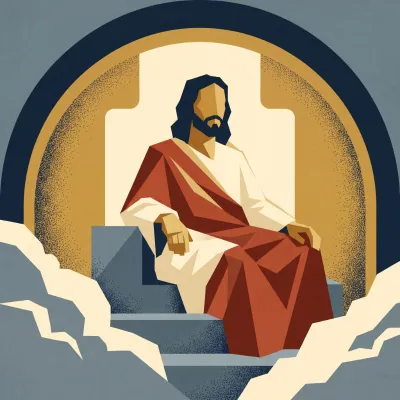
On the slope of the Mount of Olives, a group of ordinary men once stood with their eyes fixed on the sky, watching their teacher and friend rise away from them until a cloud hid Him from their sight. Then the hill went quiet. We usually stop the story there. But there is another side to that morning, a side the men on the hill could not see. From heaven's side, it was not a goodbye. It was an arrival, a homecoming, and the beginning of the work Jesus is still doing for you right now. For many believers, the ascension is the least understood part of the whole story of Jesus. Yet what He did the moment He returned tells us whether the cross actually worked, where He is now, and what He is doing about our sin, our prayers, and our future. In this episode, we explore what Jesus did on the other side of the cloud. He returned to the glory He shared with the Father before the world began. He sat down at the right hand of the Majesty in heaven, because the work of purification for sins was finished. He entered the true sanctuary, heaven itself, to appear for us in God's presence. He was exalted to the highest place, received the kingdom Daniel saw, carried our humanity to the throne, began to intercede for His people, and poured out the promised Holy Spirit. Bible verses included in this episode: “After he said this, he was taken up before their very eyes, and a cloud hid him from their sight.” (Acts 1:9) “After he had provided purification for sins, he sat down at the right hand of the Majesty in heaven.” (Hebrews 1:3) “The Lord says to my Lord: Sit at my right hand until I make your enemies a footstool for your feet.” (Psalm 110:1) “For Christ did not enter a sanctuary made with human hands that was only a copy of the true one; he entered heaven itself, now to appear for us in God's presence.” (Hebrews 9:24) “Therefore God exalted him to the highest place and gave him the name that is above every name.” (Philippians 2:9) “He always lives to intercede for them.” (Hebrews 7:25) “Exalted to the right hand of God, he has received from the Father the promised Holy Spirit and has poured out what you now see and hear.” (Acts 2:33) This message is for anyone who believes Jesus died and rose, but on some days feels He is far away. When you are afraid, remember that He sat down. When you cannot pray, remember that He always lives to intercede for you. When you feel alone, remember that by His Spirit He is closer than your own breath. You are not standing on an empty hill under an empty sky. He has not left you. He has gone ahead of you, and He is holding you all the way home.
 29 min
Bible Chapters Explained
The Four Horsemen of the Apocalypse: The Book of Revelation
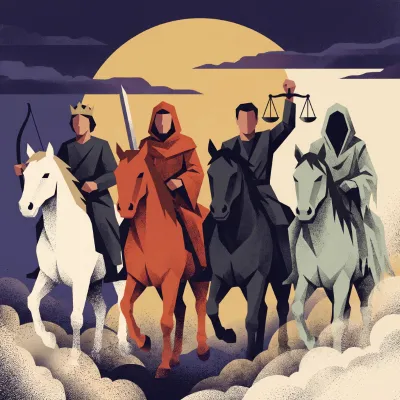
The book of Revelation was not written to frighten God's people. It was written to comfort them. Its first readers were ordinary believers in a hard and hostile world, afraid of what tomorrow would bring. And the vision John sends them does not begin with the horses. It begins in a throne room, with God seated at the center of everything, worshiped without pause. The word apocalypse does not mean disaster. It means an unveiling, the pulling back of a curtain so you can finally see what was there all along. Conquest, war, hunger, and death have ridden through every century. Revelation lets you see them clearly, and see the one thing you could never see with your own eyes: whose hand breaks the seals and sets the limits. In this episode, we walk through the four horsemen of Revelation chapter 6. We begin with the sealed scroll that no one was worthy to open, and the Lion of Judah who turns out to be a Lamb that was slain. We look at the living creatures who call each rider forward, the white horse of conquest, the red horse of war, the black horse of famine with its scales and its day's wage for a quart of wheat, and the pale horse named Death with Hades following behind. We trace how the prophets Jeremiah and Ezekiel spoke of the same sword, famine, plague, and wild beasts, and why the martyrs under the altar cry out, "How long?" Every rider is given, permitted, and limited. Evil in this vision is real, but it is never sovereign. Bible verses included in this episode: “Worthy is the Lamb who was slain.” (Revelation 5:12) “And I looked, and behold, a white horse! And its rider had a bow, and a crown was given to him, and he came out conquering, and to conquer.” (Revelation 6:2) “Its rider was permitted to take peace from the earth, so that people should slay one another, and he was given a great sword.” (Revelation 6:4) “A quart of wheat for a denarius, and three quarts of barley for a denarius, and do not harm the oil and wine!” (Revelation 6:6) “And its rider's name was Death, and Hades followed him. And they were given authority over a fourth of the earth, to kill with sword and with famine and with pestilence and by wild beasts of the earth.” (Revelation 6:8) This message is for anyone who watches the news and feels that everything is coming apart, or who feels the pale rider waiting at the end of the hall. The Bible does not tell you the riders are not real. It tells you they are not in charge. The riders are real, but they are held. The seals are broken, but only by wounded and loving hands. They answer to a Lamb, and the Lamb is for you.
 31 min
Stories of Bible Characters
The Untold Truth About Methuselah, Enoch and Noah: Why God Waited for Him
Enoch walked so closely with God that he never tasted death. Noah built a boat on dry land and carried his family safely over a drowning world. And between them stands Methuselah, the man who lived longer than anyone who has ever drawn breath. He left behind no sermon and no miracle, only a name and a number so large it barely feels real. Yet Methuselah was the man God waited for. Every year he stayed alive, the flood held back. Every morning he woke, the judgment the world had already earned was pushed one more day into the future. His long life was the longest stretch of patience God ever held over a world that had run out of reasons to be spared. In this episode, we explore the story of Methuselah, Enoch, and Noah together. We step into a world filled with violence and corruption, meet Enoch, the father who walked with God until God took him, and consider what it meant for Methuselah to live 969 years, burying generation after generation while he watched faith itself fade. We see how God was quietly at work inside the long wait, raising up Noah, a man who found favor in His eyes before he ever cut a single plank for the ark. These three men, one family, show the shape of the gospel in miniature. God guards His promise, and He prepares a way of rescue before the storm ever breaks. Bible verses included in this episode: “Enoch walked faithfully with God; then he was no more, because God took him away.” (Genesis 5:24) “Altogether, Methuselah lived a total of 969 years, and then he died.” (Genesis 5:27) “He will comfort us in the labor and painful toil of our hands caused by the ground the Lord has cursed.” (Genesis 5:29) “But Noah found favor in the eyes of the Lord.” (Genesis 6:8) “The Lord is not slow in keeping his promise, as some understand slowness. Instead he is patient with you, not wanting anyone to perish, but everyone to come to repentance.” (2 Peter 3:9) If you have prayed the same prayer for years and heaven has felt silent, a long wait is not proof that God has forgotten you. Very often, the wait is where God is doing His deepest and quietest work. You are not too far behind, and you are not too late. The patience that held back a flood is patient enough to wait for you to take one small step toward home. The door is still open.
 39 min
Stories of Bible Characters
Absalom - The Most Beautiful Traitor in the Bible
Absalom became a traitor because admiration was the only thing anyone ever gave him. Israel praised his face. Strangers turned in the street to watch him pass. But in all those years of being looked at, no one ever answered the one question he actually asked. He had killed a brother, and he wanted his father to rule on it. What he got was silence from his father, then a kiss, and nothing in between. The Bible almost never describes what its people looked like. Then it comes to Absalom and stops to stare. Here was a prince with royal blood on both sides, wealth, charm, and a face the nation talked about. Everyone assumed they were looking at Israel's future. In this episode, we explore the complete story of Absalom, David's third son. We follow the crime against his sister Tamar that went unanswered, the feast at Baal Hazor where Amnon was struck down, three years of exile in Geshur, and two more years living in Jerusalem without ever seeing the king's face. We watch him stand at the city gate, handing strangers the very hearing his father denied him, until he stole the hearts of Israel. We walk with David as he flees barefoot up the Mount of Olives, see Ahithophel's counsel overturned by the hand of God, and stand in the forest of Ephraim where Absalom's life ended hanging in an oak tree. Finally, we hear the cry of a father who loved his son all along, and we see how God does everything David could not do. He devises ways so that a banished person does not remain banished from Him. Bible verses included in this episode: “In all Israel there was not a man so highly praised for his handsome appearance as Absalom. From the top of his head to the sole of his foot there was no blemish in him.” (2 Samuel 14:25) “Like water spilled on the ground, which cannot be recovered, so we must die. But that is not what God desires; rather, he devises ways so that a banished person does not remain banished from him.” (2 Samuel 14:14) “Absalom behaved in this way toward all the Israelites who came to the king asking for justice, and so he stole the hearts of the people of Israel.” (2 Samuel 15:6) “I lie down and sleep; I wake again, because the Lord sustains me.” (Psalm 3:5) “For the Lord had determined to frustrate the good advice of Ahithophel in order to bring disaster on Absalom.” (2 Samuel 17:14) “O my son Absalom! My son, my son Absalom! If only I had died instead of you, O Absalom, my son, my son!” (2 Samuel 18:33) “They will see his face, and his name will be on their foreheads.” (Revelation 22:4) If you are living with a long silence of your own, it can start to sound like an answer, as if you have been set aside. That reading is wrong. God has already spoken, in a manger, at a cross, and at an empty tomb. Absalom died reaching for a face. You will see one, and it will be turned toward you.
 36 min
Bible Chapters Explained
The 40 Days Jesus Was Tempted in the Wilderness, and How He Won
Before there was a battle, there was a voice. Jesus stood in the Jordan River, heaven opened, and the Father declared His love out loud. If you were writing the story, the next chapter would be triumph. Instead, the very next verse says the Spirit led Him into the wilderness to be tempted by the devil. We tend to believe that if God loves us, He will keep us out of the wilderness. The Bible shows us something different. Sometimes the wilderness is not the place where God's love ran out. Sometimes it is exactly where His love is leading. In this episode, we walk into the desert with Jesus and watch closely. We explore why forty is the number of testing, from Noah to Moses to Elijah, and how Jesus stepped into Israel's own story to stand where God's people had stumbled. We look at the three temptations, stones into bread, the leap from the temple, and the kingdoms of the world, and how each one attacked His identity, tempted Him to test God, and offered a crown without the cross. Every answer Jesus gave came from Deuteronomy, the very book Moses preached to the generation that failed. Jesus did not win by reaching for a power we do not have. He won with four weapons within reach of every believer: a heart full of Scripture, an identity resting in the Father's love, the power of the Spirit, and a settled refusal to take the shortcut. Bible verses included in this episode: “This is my Son, whom I love; with him I am well pleased.” (Matthew 3:17) “Then Jesus was led by the Spirit into the wilderness to be tempted by the devil.” (Matthew 4:1) “It is written: ‘Man shall not live on bread alone, but on every word that comes from the mouth of God.’” (Matthew 4:4) “It is also written: ‘Do not put the Lord your God to the test.’” (Matthew 4:7) “Away from me, Satan! For it is written: ‘Worship the Lord your God, and serve him only.’” (Matthew 4:10) “Because he himself suffered when he was tempted, he is able to help those who are being tempted.” (Hebrews 2:18) “And God is faithful; he will not let you be tempted beyond what you can bear. But when you are tempted, he will also provide a way out so that you can endure it.” (1 Corinthians 10:13) This message is for anyone in a wilderness right now, whether it is a hospital room, an empty house, a body growing older, or a faith that feels dry. Being led into a wilderness is not evidence that God has abandoned you, and you are not fighting anything your Lord has not felt in His own body. If your life feels like day forty, hold on. Angels came in the morning. The Father's supply was never late. And the Son who won in the desert is not finished with you.
 33 min
Bible Chapters Explained
Isaiah Saw the Throne Room of God, and It Changed Him Forever
The most famous vision of God in the entire Old Testament is dated by a funeral. King Uzziah had ruled Judah for about fifty two years, and he died a leper, shut out of the temple of the Lord. Assyria was rising on the horizon. If you had asked anyone in Jerusalem what they saw that year, they would have said an empty throne. Isaiah looked at the same year and saw the throne that has never been empty for one second in all of eternity. What he saw rebuilt him from the inside out, and it answers the question that lives quietly in almost every believer's heart: what is God really like? In this episode, we walk through Isaiah chapter 6. We look at the Lord seated high and lifted up, the train of His robe filling the temple, and the seraphim, the burning ones, covering their faces as they cry holy, holy, holy. We hear Isaiah's cry, "Woe is me, for I am undone," and see why the conviction landed on his lips. We watch a live coal carried from the altar to cleanse him, contrast his humility with Uzziah's pride, and hear God ask, "Whom shall I send?" We also face the hard assignment Isaiah was given, the holy seed in the stump, and John's revelation of whose glory Isaiah actually saw. The terrifying holiness and the tender mercy of God are not two Gods, or two moods of God. They are one Person. Bible verses included in this episode: “In the year that King Uzziah died, I saw the Lord sitting on a throne, high and lifted up, and the train of His robe filled the temple.” (Isaiah 6:1) “Holy, holy, holy is the Lord of hosts; the whole earth is full of His glory!” (Isaiah 6:3) “Woe is me, for I am undone! Because I am a man of unclean lips, and I dwell in the midst of a people of unclean lips; for my eyes have seen the King, the Lord of hosts.” (Isaiah 6:5) “Behold, this has touched your lips; your iniquity is taken away, and your sin purged.” (Isaiah 6:7) “Also I heard the voice of the Lord, saying: ‘Whom shall I send, and who will go for Us?’ Then I said, ‘Here am I! Send me.’” (Isaiah 6:8) “These things Isaiah said when he saw His glory and spoke of Him.” (John 12:41) “There shall come forth a Rod from the stem of Jesse, and a Branch shall grow out of his roots.” (Isaiah 11:1) Everyone has an Uzziah, some pillar that makes the world feel steady, and for every one of us the year comes when it falls. If you are in that year right now, this vision was preserved for you. The King you cannot see is still seated, and His mercy still moves toward the broken before they can move toward Him. Whatever this year has taken from you, the throne room of God has lost nothing. He still reigns, still cleanses, and still calls. Here am I. Send me.
 36 min
Bible Books Explained
Every King of Israel and Judah, and the One Choice That Decided Their Fate
Imagine your whole life pressed down into a single sentence, and that one line is all history remembers of you. That is exactly what happened to the kings of Israel and Judah. Across four centuries there were dozens of them. Some were brilliant and rich beyond imagining, others were cowards, and a few were murderers. Yet the Bible does not measure them by their armies, their gold, their buildings, or the length of their reigns. It hands each one the same kind of verdict: he did what was right in the eyes of the Lord, or he did what was evil. And the verdict almost never matches what we would expect. Kings who looked like winners are buried under the word evil, while a few who barely held their kingdom together are remembered as men who did right. There must be something the Bible is watching that we are not. In this episode, we explore the one choice that ran underneath every reign. From Israel's demand for a king like the nations, to Solomon's slow drift, Jeroboam's golden calves, and the high places that even good kings left standing, Scripture keeps asking the same question: whom will you trust as King? We look at Asa, Hezekiah, and Josiah, who cleared the ground completely, and at Manasseh and Joash, who show that faith is never inherited but chosen fresh by every heart. And we see how the promise to David kept the lamp burning until the true King came, faced the oldest temptation of all, and answered, "Him only." Bible verses included in this episode: “I have set before you life and death, blessing and curse. Therefore choose life, that you and your offspring may live.” (Deuteronomy 30:19) “They have not rejected you, but they have rejected me from being king over them.” (1 Samuel 8:7) “He did what was right in the eyes of the Lord, yet not with a whole heart.” (2 Chronicles 25:2) “He trusted in the Lord, the God of Israel, so that there was none like him among all the kings of Judah after him, nor among those who were before him.” (2 Kings 18:5) “Before him there was no king like him, who turned to the Lord with all his heart and with all his soul and with all his might, according to all the Law of Moses, nor did any like him arise after him.” (2 Kings 23:25) “All these I will give you, if you will fall down and worship me.” (Matthew 4:9) “Be gone, Satan! For it is written, You shall worship the Lord your God and him only shall you serve.” (Matthew 4:10) This message is for anyone who started well and drifted, who has let comfortable things creep back onto the hills of the heart. The same choice God set before every king is still set before you, and it is not too late to make it. The thrones are dust and the crowns are scattered, but the King who made the choice perfectly is still saying, with all the patience of those long centuries and all the love of the cross, choose life.
 32 min
Bible Chapters Explained
The Book of Daniel: The Prophecy That Gave the Exact Year of the Messiah
There is a prophecy in the ninth chapter of Daniel that measured out the years until the Messiah would come. It is not a poem or a symbol. It is a count. A command goes out to rebuild a ruined city, a set number of years is marked off, and at the end of those years the Anointed One arrives. Follow the count, and it lands in the very generation when Jesus of Nazareth walked the roads of Judea. But God did not hand this timeline to an old man in exile so we could be impressed by arithmetic. He gave it inside an answer to a prayer about sin. And the first thing the prophecy promises is not a date on a calendar. It is an end to guilt. In this episode, we explore Daniel chapter 9. We find Daniel, old and far from home, reading the scroll of Jeremiah and falling to his knees to confess, "We have sinned," on behalf of his whole people. We watch Gabriel arrive while he is still praying, calling him greatly beloved. We look at the six purposes of the seventy sevens, all circling the ending of sin, then walk through the count of four hundred and eighty three years from the command to rebuild Jerusalem, and why every careful reckoning lands in the early decades of the first century. And we hear the words that turn a tragedy into the gospel: the Anointed One would be cut off, but not for himself. The prophecy told the world when. The cross told the world how. And the empty tomb told the world it was finished. Bible verses included in this episode: “We have sinned, and have committed iniquity, and have done wickedly, and have rebelled.” (Daniel 9:5) “Seventy weeks are decreed about your people and your holy city, to finish the transgression, to put an end to sin, and to atone for iniquity, to bring in everlasting righteousness, to seal both vision and prophet, and to anoint a most holy place.” (Daniel 9:24) “The going out of the word to restore and build Jerusalem.” (Daniel 9:25) “Cut off, but not for himself.” (Daniel 9:26) “He was cut off out of the land of the living: for the transgression of my people was he stricken.” (Isaiah 53:8) This message is for anyone who feels their failures have gone on too long, anyone waiting on God for a promise that has not yet come, and anyone who feels old, tired, or alone in their faith. Daniel died without seeing the prophecy fulfilled, and still he believed, because he knew the character of the God who made it. Your forgiveness was not an emergency repair. It was an appointment on God's calendar, and He kept it. The God who declared the end from the beginning is calling you, as He called Daniel, greatly beloved.
 34 min
Bible Chapters Explained
The Seal of God: What Scripture Reveals About Those Who Belong to Him
You can love the Bible for forty years and still lie awake at two in the morning, wondering whether you truly belong to God. Paul wrote to people in that exact condition. Near the end of his life, to a young pastor holding together a shaken church, he described the seal of God and even told us what is written on it. That seal has two lines. The first is about something God knows. The second is about something that shows. Together, they are how Scripture describes the people who belong to Him. In this episode, we explore what the Bible reveals about the seal of God. We trace the first line back to Moses on a day when no one could tell who belonged to the Lord. We see Abraham receive circumcision as a seal of a righteousness he already had by faith, and learn why the Holy Spirit is not a token but a first installment of our inheritance. We walk through Judah handing his seal to Tamar, the gold plate engraved "Holy to the Lord" on the high priest's forehead, the mark Ezekiel saw placed on those who grieved, the signet ring pulled off Jehoiachin and given again to Zerubbabel, and the Lamb who alone could open the sealed scroll. A seal is not an emotion. It is something pressed in from outside by someone else. You do not carry the name because you can feel it. You carry it because He pressed it. Bible verses included in this episode: “Nevertheless, God's solid foundation stands firm, sealed with this inscription: ‘The Lord knows those who are his,’ and, ‘Everyone who confesses the name of the Lord must turn away from wickedness.’” (2 Timothy 2:19) “And he received circumcision as a sign, a seal of the righteousness that he had by faith while he was still uncircumcised.” (Romans 4:11) “And you also were included in Christ when you heard the message of truth, the gospel of your salvation. When you believed, you were marked in him with a seal, the promised Holy Spirit.” (Ephesians 1:13) “And do not grieve the Holy Spirit of God, with whom you were sealed for the day of redemption.” (Ephesians 4:30) “Go throughout the city of Jerusalem and put a mark on the foreheads of those who grieve and lament over all the detestable things that are done in it.” (Ezekiel 9:4) “They will see his face, and his name will be on their foreheads.” (Revelation 22:4) “The Spirit himself testifies with our spirit that we are God's children.” (Romans 8:16) This message is for anyone in a quiet house, worn out, or haunted by something in the past that whispers God must have written you off. Nothing in these passages ties the seal of God to your feelings. If something in you keeps turning toward Him, that is the second line of the inscription, showing. He knows those who are His. He pressed His name into you a long time ago, He did not do it lightly, and He is not going to lose you now.
 36 min
Words of Jesus
What did Jesus mean when He said, “Take up your cross and follow Me”?
What did Jesus mean when He said, “Take up your cross and follow Me”? Many hear those words and think of everyday troubles. But in Jesus’ world, the cross was a one-way road, an image of surrender, not inconvenience. His call is not about carrying random pain. It is about yielding your life to His lead. Jesus did not create a gentler version for those who only wanted comfort, or a special category for stronger believers. He made one path for all who would be His disciples. And hidden in the demand is a promise: whoever loses his life for His sake will save it. In this episode, we explore the core of Jesus’ call and the meaning of its three verbs: deny, take up, and follow. We clear away common misunderstandings, that the cross means any inconvenience, a personality change, only dramatic persecution, a search for pain, or a disdain for joy. We then look at what He did mean through three layers of surrender: a decisive yes to Jesus, a daily surrender in small and unseen choices, and a hopeful surrender framed by resurrection. We also consider the honest cost of discipleship, the prophetic thread of the suffering Servant that runs through Scripture, and the deep truth of union with Christ, where the old self’s claim to the throne is broken and Christ lives in us. Finally, we see why this call matters now, in a world that tells us the self is the highest authority. Bible verses included in this episode: “If anyone would come after me, let him deny himself and take up his cross and follow me.” (Mark 8:34) “For whoever would save his life will lose it, but whoever loses his life for my sake and the gospel’s will save it.” (Mark 8:35) “If anyone would come after me, let him deny himself and take up his cross daily and follow me.” (Luke 9:23) “My grace is sufficient for you, for my power is made perfect in weakness.” (2 Corinthians 12:9) “I have been crucified with Christ. It is no longer I who live, but Christ who lives in me.” (Galatians 2:20) The King did not ask for what He would not give. He carried the wood, faced the shame, and laid down His life for His enemies. When He says, “Follow Me,” He is not pointing to a road He has not walked. The cross you take up is not a symbol of defeat. It is the mark of belonging to the crucified and risen Lord. Losing your life to Him is how you receive it back, made new and anchored in hope.
 36 min
Words of Jesus
What did Jesus mean when He said, “These things I command you, that you love one another”?
“These things I command you, that you love one another.” The words are simple, yet they open a new way to live. Jesus sets the pattern for His people: love that starts with Him, moves toward each other, and reshapes how we face conflict, disappointment, and ordinary days. Jesus defines love so that no one can shrink it into sentiment or stretch it into something vague. He gives the measure Himself: as I have loved you. Love, in His mouth, is not a reward we give when people deserve it. It is a steady, self-giving movement toward the good of another, even when it costs. In this episode, we explore what Jesus meant by “love one another” and why He made it the mark that tells the world who we belong to. We look at how this command connects to loving our neighbor as ourselves, and how the story of the Good Samaritan refuses to let love shrink into an in-group project. We consider unity without sameness in a diverse body of believers, where love welcomes, speaks truth gently, guards dignity in conflict, and holds the center of the faith firmly. We then climb to the highest peak of this teaching, Jesus’ call to love our enemies and pray for those who persecute us, and see that He never asks us to do what He Himself avoided. Finally, we look at the pattern and the power of His love. Like a branch that bears fruit by staying connected to the vine, our love grows not by willpower alone but by abiding in Him. Bible verses included in this episode: “These things I command you, that you love one another.” (John 15:17) “This is my commandment, that you love one another as I have loved you.” (John 15:12) “Greater love has no one than this, that someone lay down his life for his friends.” (John 15:13) “A new commandment I give to you, that you love one another. Just as I have loved you, you also are to love one another… By this all people will know that you are my disciples, if you have love for one another.” (John 13:34–35) “You shall love your neighbor as yourself.” (Matthew 22:39) “Love your enemies and pray for those who persecute you.” (Matthew 5:44) Most of us know how hard love can be. We remember a sharp word, a painful silence, a broken promise. Into those places, Jesus’ command does not scold. It invites. You are not asked to pour from an empty cup. You are loved first. The sign of belonging to Jesus is not a label we wear but a love we live. Let His word shape your next conversation, your next choice, and your next act of mercy.
 41 min
Hard Bible Questions
What God Meant When He Said, “Let Us Make Man in Our Image”
What does it mean when God says, "Let us make man in our image"? Why the "us," and what does "image" tell us about who we are? This short line in the first chapter of the Bible holds the key to human identity, purpose, and the story God is writing with humanity. An image points beyond itself to the one it reflects. Like a coin carrying a king's face, we are not God, but our lives are meant to carry His likeness so that people can see what He is like: truthful, just, and loving. This likeness is not about height, age, or strength. It is about the capacity to know God, to speak truth, to keep promises, and to choose love, and it carries a royal calling to care for His world. In this episode, we explore what the image of God means and why it gives every person a worth that illness, failure, poverty, or age cannot erase. We look at the different ways Christians have understood the "us" and "our" in Genesis, from a holy counsel within the life of the Father, the Word, and the Spirit to a royal court of heaven, and why the fullness of the one God shines through the text. We see how ancient kings placed statues of themselves across their lands, and how Genesis turns that picture around by placing living images of God in every field, market, and home. We also follow the image through the whole story of Scripture: marred by sin but not erased, displayed in perfection in Jesus, renewed in believers by the Spirit, and completed on the day Christ appears. Bible verses included in this episode: “Then God said, ‘Let us make mankind in our image, in our likeness, so that they may rule.’” (Genesis 1:26) “So God created mankind in his own image, in the image of God he created them; male and female he created them.” (Genesis 1:27) “The man has now become like one of us, knowing good and evil.” (Genesis 3:22) “Whom shall I send? And who will go for us?” (Isaiah 6:8) “The Son is the image of the invisible God, the firstborn over all creation.” (Colossians 1:15) “We know that when Christ appears, we shall be like him, for we shall see him as he is.” (1 John 3:2) You were not thrown into a cold universe. You were chosen to carry God's mark and to reflect His heart. Let that truth quiet shame and fear. The God who spoke galaxies into being also spoke a purpose over you, and He has not forgotten what He began.
 32 min
Bible Chapters Explained
Where Was Jesus During Lucifer's Rebellion in Heaven?
The rebellion in heaven was aimed at Jesus. Lucifer wanted the highest seat there is, and that seat belonged to the Son of God. Every angel in heaven had been made by Him, including the one who turned against Him. So Lucifer reached for a throne that already had an owner. We often picture the Son somewhere in the background, watching a drama unfold between God and a rebellious angel. But Scripture shows us something far more personal. He was not in the background. He was the one being rebelled against. In this episode, we explore where Jesus was during Lucifer's rebellion. From Hebrews chapter 1 and Colossians chapter 1, we see that the adversary was never a rival to Jesus, but a creature of Jesus. We look at Isaiah and Ezekiel's portraits of a guardian cherub who was blameless until wickedness was found in him, Jesus' quiet words about the one who "does not stand in the truth," and the lightning fall in Luke 10, paired with the words almost everyone skips. We consider why the Son never drew a sword, why Michael said "The Lord rebuke you," how the accuser was answered in Zechariah's courtroom, and why there is no rescue mission for fallen angels, but there is one for us. The rebellion asked who deserves the throne. The answer turned out to be the One who was willing to leave it. Bible verses included in this episode: “Let all God's angels worship him.” (Hebrews 1:6) “I will make myself like the Most High.” (Isaiah 14:14) “For in him all things were created: things in heaven and on earth, visible and invisible, whether thrones or powers or rulers or authorities; all things have been created through him and for him.” (Colossians 1:16) “You were blameless in your ways from the day you were created till wickedness was found in you.” (Ezekiel 28:15) “I saw Satan fall like lightning from heaven.” (Luke 10:18) “Do not rejoice that the spirits submit to you, but rejoice that your names are written in heaven.” (Luke 10:20) “For surely it is not angels he helps, but Abraham's descendants.” (Hebrews 2:16) “They triumphed over him by the blood of the Lamb and by the word of their testimony.” (Revelation 12:11) Underneath this question there is often a more personal one: if God let the brightest one go, will He let me go too? The difference between the one who fell and the one who is held is not the size of the failure. Nobody came for the fallen angels, and Someone came for you. If you are tired, carrying an old shame, or feeling your faith grow thin, rejoice that your name is written in heaven. You are not the next one to fall. You are the reason He came down.
 37 min
Bible Chapters Explained
If You Understand Proverbs 1, You Understand the Entire Bible
Proverbs chapter 1 puts one young man in a noisy street with three voices calling his name. His father, from inside the house. A group of men, from the road. And the voice of God's own wisdom, calling out loud in the busy market where anyone can hear. Three invitations, one life, and everything that follows depends on which one he answers. Most books of the Bible drop you straight into the middle of something. Proverbs stops first and tells you exactly what it is for. It was written for the simple who are just starting out, and for the wise who have walked with God for fifty years. The wise one is not the person who has finished. The wise one is the person who is still listening. In this episode, we walk through Proverbs 1 and the sentence the whole book is built on: the fear of the Lord is the beginning of knowledge. We explore why this fear draws you nearer rather than pushing you away, and why "beginning" means foundation, not a stage you outgrow. We hear a father's instruction at the door, the recruiting pitch of sinful men who promise "one purse," the net spread in sight of the bird, and Wisdom crying aloud in the street with an offer to pour out her spirit on anyone who turns. We also face the hard warning honestly, and see how the pattern of two voices runs from Eden to Moses, Elijah, Jesus, and the last invitation of Revelation. Everything Proverbs 1 says about wisdom, the New Testament eventually says about a Person. Christ is the wisdom of God, and the fear of the Lord has a face, and the face is kind. Bible verses included in this episode: “The fear of the Lord is the beginning of knowledge; fools despise wisdom and instruction.” (Proverbs 1:7) “Hear, my son, your father's instruction, and forsake not your mother's teaching.” (Proverbs 1:8) “My son, if sinful men entice you, do not give in to them.” (Proverbs 1:10) “Wisdom cries aloud in the street, in the markets she raises her voice.” (Proverbs 1:20) “If you turn at my reproof, behold, I will pour out my spirit to you; I will make my words known to you.” (Proverbs 1:23) “Let anyone who is thirsty come to me and drink.” (John 7:37) “But whoever listens to me will dwell secure and will be at ease, without dread of disaster.” (Proverbs 1:33) The voices calling you today may be quieter: too old, too far gone, unnoticed, unheard. Every one of them presents itself as the truth. But Wisdom is still out in the street, calling to exactly the kind of person you are afraid you are. She is still calling, which means it is not too late. Turn, and she will pour herself out. Whoever listens will dwell secure.
 34 min
Hard Bible Questions
Why Did God Create Satan Knowing He Would Rebel Against Him?
If God knew Satan would rebel, why create him at all? It is one of the hardest questions a believer can ask, because it tests what we believe about God's goodness, wisdom, and justice. God knows everything, and yet His creatures can choose. The Bible's answer begins with a boundary: evil is real, but evil is not original. God made all things good, including the high creature who later fell. Satan is not a rival god standing opposite the Lord. He is a creature, with a beginning, with limits, and with accountability. What God created was good because it made room for love. What God did not create was the crooked desire that set itself against Him. In this episode, we explore why real love requires a real will, and why a world of beings who could only follow but never choose would be a world without genuine worship or friendship with God. We look at the difference between God testing and a creature tempting, why foreknowledge is not the same as guilt, and how the cross shows God's plan and human responsibility standing side by side. We consider what Scripture reveals about Satan's fall and what it wisely leaves veiled, and why God chose a history in which His holiness, justice, mercy, and love would be displayed in their fullest range. Finally, we look at the end of the story, which is already certain. The deceiver's time is measured, and the devil's present activity runs on a leash. Bible verses included in this episode: “God saw all that he had made, and it was very good.” (Genesis 1:31) “You were blameless in your ways from the day you were created till wickedness was found in you.” (Ezekiel 28:15) “When tempted, no one should say, ‘God is tempting me.’ For God cannot be tempted by evil, nor does he tempt anyone.” (James 1:13) “This man was handed over to you by God’s deliberate plan and foreknowledge.” (Acts 2:23) “The secret things belong to the Lord our God, but the things revealed belong to us and to our children forever.” (Deuteronomy 29:29) “The reason the Son of God appeared was to destroy the devil’s work.” (1 John 3:8) “And the devil, who deceived them, was thrown into the lake of burning sulfur.” (Revelation 20:10) If this question has kept you up at night, you are not alone. The God who knew rebellion would come also chose to draw near, carried our shame, and promised a day when the shadows will be gone. The question begins with Satan, but the answer leads to Jesus. Evil is real, but not final.
 33 min
Words of Jesus
Why did Jesus instruct us to pray, “Lead us not into temptation”?
Why would we ask God not to do something He would never do? When Jesus taught us to pray, “Lead us not into temptation,” He was not suggesting that God might drag us toward sin unless we say otherwise. Life is a path with many turns, and in this prayer we ask our Father to be the One choosing the turns. Temptation often looks like a shortcut, harmless or even beautiful. This humble request admits that we are not good at spotting the shortcuts that become traps. It is a follower’s prayer, like a child taking a parent’s hand on the way home. In this episode, we explore what Jesus meant by this line of the Lord’s Prayer and why He placed it at the heart of discipleship. We look at the holiness of God, who tempts no one, and the difference between God’s testing and the enemy’s enticing. We trace the biblical pattern of testing and trust, from Israel in the wilderness to the Shepherd who leads through the valleys, and we consider how Jesus faced temptation for us in the wilderness and warned His friends in Gethsemane to watch and pray. We also look at how God answers this prayer: by ordering our steps, sharpening our conscience, providing a way of escape, reworking our desires, placing helpers along the way, teaching us to rest, and restoring us quickly when we stumble. Bible verses included in this episode: “And lead us not into temptation, but deliver us from the evil one.” (Matthew 6:13) “Let no one say when he is tempted, ‘I am being tempted by God,’ for God cannot be tempted with evil, and he himself tempts no one.” (James 1:13) “He leads me in paths of righteousness for his name’s sake.” (Psalm 23:3) “Watch and pray that you may not enter into temptation.” (Matthew 26:41) This prayer speaks to the person who is tired of falling in the same place, to the one who fears the next test, and to the one who thinks they must carry themselves. You are not asked to be your own savior. You are invited to be led. The One who taught us to pray this way is the One who safely leads. Keep asking, keep trusting, and keep in step with the Shepherd who never tempts, never forgets, and never loses those who follow His lead.
 32 min
Bible Chapters Explained
If You Understand Matthew 24, You Understand the Entire Bible
Most of us come to Matthew 24 looking for a schedule, wanting to know whether the world is finally falling apart. Jesus spends most of the chapter doing the opposite of what we expect. He takes the signs away, tells His friends to stop being alarmed, and gives them a handful of clear commands, and not one of them is "figure out when." Jesus taught that this world is going somewhere, and that He Himself is the ending. He said He would come back in person, in the open, where no one could miss it. He said no one knows the day. And He named the very things people always point to as proof, war and hunger and earthquakes, and said plainly that they are not the signal. In this episode, we walk through Matthew 24 from the beginning. We sit with the disciples on the Mount of Olives as they point at the temple and ask the question the whole chapter answers. We explore why wars are only the beginning of birth pains, why Jesus warned that the love of many would grow cold, and how the abomination of desolation and the flight to the hills were fulfilled when Rome destroyed Jerusalem in the year 70. We look at how the prophets spoke of near and far events together, why His coming will be like lightning, what the fig tree and "this generation" mean, and why the chapter ends not in the sky but in a kitchen. The disciples asked when. Jesus asked who. They asked for a sign in the sky, and He answered with a hungry neighbor. Bible verses included in this episode: “Truly I tell you, not one stone here will be left on another; every one will be thrown down.” (Matthew 24:2) “See to it that you are not alarmed. Such things must happen, but the end is still to come.” (Matthew 24:6) “Because of the increase of wickedness, the love of most will grow cold.” (Matthew 24:12) “For as lightning that comes from the east is visible even in the west, so will be the coming of the Son of Man.” (Matthew 24:27) “But about that day or hour no one knows, not even the angels in heaven, nor the Son, but only the Father.” (Matthew 24:36) “Therefore keep watch, because you do not know on what day your Lord will come.” (Matthew 24:42) “Who then is the faithful and wise servant, whom the master has put in charge of the servants in his household to give them their food at the proper time?” (Matthew 24:45) This message is for anyone afraid of the news, tired of failed predictions, or quietly ashamed that their life feels too small to matter. The One who is coming is the same Jesus who paused in the middle of a prophecy to worry about mothers with babies and cold winter roads. He is coming, and you cannot know when. The best thing you can be doing when He arrives is the small, ordinary good you were already trusted with today. Heaven and earth will pass away, but His words will not.